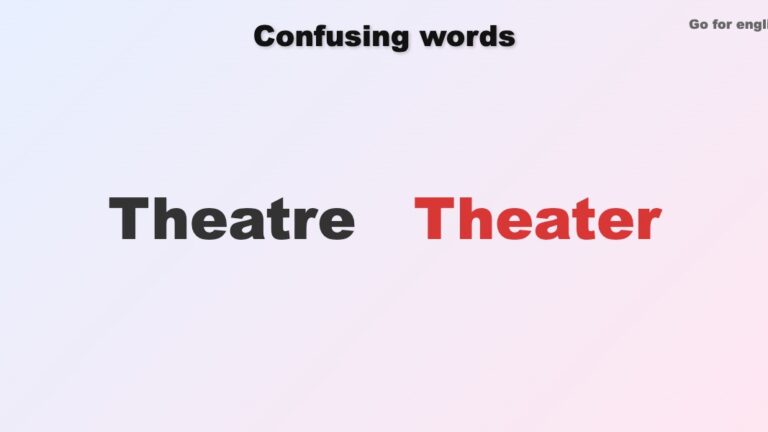
The distinction between ‘theatre’ and ‘theater’ often leaves many learners scratching their heads, as these two terms, while similar in meaning, reflect different cultural nuances and preferences. Understanding this difference is crucial for anyone looking to enhance their English vocabulary and communicate effectively in various contexts. Whether you’re discussing a Shakespearean play in London or a blockbuster film in Los Angeles, recognizing the appropriate usage can elevate your conversation and writing. In this article, we will explore the origins, meanings, and contexts of both terms, helping you navigate the theatrical world with confidence.
The terms theatre and theater refer to the same concept: a place where live performances, such as plays and musicals, are staged. The key difference lies in the regional spelling preferences. Theatre is commonly used in British English, while theater is the preferred spelling in American English. Both terms can also refer to the art form itself, encompassing various performance types, but the spelling choice often reflects the writer’s or speaker’s regional background.
What Do ‘Theatre vs Theater’ Mean?
The terms ‘theatre’ and ‘theater’ both refer to a place where performances such as plays, musicals, and other live shows are presented. The primary difference between the two lies in their spelling and regional usage. ‘Theatre’ is the preferred spelling in British English, while ‘theater’ is commonly used in American English. Both terms serve as nouns and can describe not only the physical venue but also the art form itself.
For example, you might say, “I am going to the theatre tonight to watch a new play,” if you are in the UK. Conversely, in the US, one would say, “I am going to the theater tonight to watch a new play.” Despite the spelling difference, the meaning remains the same, highlighting the universal appeal of live performance.
‘Theatre vs Theater’: The Differences
While ‘theatre’ and ‘theater’ fundamentally refer to the same concept, their usage can vary based on regional preferences and stylistic choices. In British English, ‘theatre’ often conveys a more traditional or artistic connotation, while in American English, ‘theater’ can sometimes imply a more commercial or modern approach to live performance.
Moreover, there are instances where the terms may be used differently based on context. For example, ‘theatre’ might be used in the context of classical arts, such as “Shakespearean theatre,” emphasizing the historical and cultural significance. In contrast, ‘theater’ in America could refer to a broader range of entertainment venues, including those that showcase films, as in “Let’s go to the theater to see the latest blockbuster.”
In summary, while ‘theatre’ and ‘theater’ denote the same idea, their distinctions reflect regional language preferences and can influence the connotation of the performances presented within their walls. Understanding these differences is key for anyone interested in the arts, especially when discussing the vibrant world of live performance.
Regional Preferences: Theatre vs Theater
English is a diverse language that varies significantly across different regions, reflecting the unique cultural nuances of its speakers. One area where this variation is evident is in the use of the words Theatre and Theater. While both terms refer to the same concept of a venue for performances, the choice between them is influenced by regional preferences. Understanding these differences is essential for effective communication and audience engagement.
American English
In the United States, the term Theater is the preferred spelling. For example: “I am looking forward to seeing a play at the local Theater this weekend.”
In the United States, this version is more commonly used because it aligns with the American tendency to simplify spellings and is seen as more modern and straightforward.
British English
In contrast, British English favors the spelling Theatre. For instance: “The new musical will premiere at the West End Theatre next month.”
In British English, this form is preferred, as it follows the traditional spelling derived from the Greek word “theatron,” reflecting a deeper historical connection to classical arts and literature.
Examples in Context: Theatre vs Theater
Understanding the differences between “theatre” and “theater” is crucial for learners of English, as real-life examples provide clarity on their usage. These examples offer practical insights into how each term is applied in various contexts, helping learners confidently distinguish between the two in their writing and conversations.
Theatre
- The Royal Theatre in London hosts some of the most prestigious performances in the world.
- Many students study drama at the local theatre to hone their acting skills.
- Theatre enthusiasts often attend festivals to enjoy a variety of performances.
- She has always dreamed of directing a play at the community theatre.
- The theatre was packed for the opening night of the new production.
- In college, he majored in theatre arts and participated in numerous plays.
- Theatre critics often write reviews that influence public attendance.
- Attending live theatre is a unique experience that cannot be replicated on film.
Theater
- We plan to watch the latest blockbuster at the movie theater this weekend.
- The local theater offers discounts for students and seniors on weekdays.
- He enjoys going to the theater to catch the latest action films.
- In the theater, popcorn and soda are essential snacks for moviegoers.
- Her favorite theater is known for its luxurious seating and state-of-the-art screens.
- The theater was filled with laughter during the comedy show.
- After the film, we discussed the plot and characters outside the theater.
- The theater industry has adapted to digital streaming platforms in recent years.
Synonyms & Antonyms of Theatre vs Theater
Learning synonyms and antonyms is essential for enhancing your vocabulary in English. Synonyms allow you to add variety to your speech and writing, making your communication more engaging. Conversely, antonyms help clarify the exact meaning of a word by providing contrasting terms. By familiarizing yourself with different word choices, you can sound more fluent and natural in English, improving your overall language skills.
| Term | Synonyms | Antonyms |
|---|---|---|
| Theatre | Playhouse, Stage, Performance venue | Silence, Inactivity |
| Theater | Cinema, Movie house, Playhouse | Silence, Inactivity |
Common Mistakes and How to Avoid Them
Understanding the common mistakes between “theatre” and “theater” is essential for mastering English, as even advanced learners can slip up in this area. Correcting these errors not only enhances your fluency but also improves your overall accuracy in writing and conversation.
- Using “theater” in British English: Many learners mistakenly use “theater” when referring to a place for dramatic performances in British English. Correction: Use “theatre” in the UK and “theater” in the US. Remember, regional spelling matters!
- Confusing “theatre” with “theater” in context: Some may use “theater” to refer to any performing arts venue. Correction: Use “theatre” when discussing the art form or the specific type of performance. Reserve “theater” for the physical building.
- Incorrect pluralization: Using “theatres” when referring to multiple venues is fine, but some learners incorrectly use “theaters” to refer to the art itself. Correction: “Theatre” is the correct term when discussing the art form in any context.
- Overlooking regional preferences: Ignoring regional variations can lead to misunderstandings. Correction: Familiarize yourself with both American and British usage to adjust your language based on your audience.
- Mispronouncing “theatre/theater”: Some learners mispronounce the words, often saying them the same way. Correction: In American English, it’s pronounced “thee-uh-ter,” while in British English, it can be pronounced “thee-ah-tre.” Listen to native speakers for guidance.
Tips for Correct Usage
Understanding the distinction between “Theatre” and “Theater” is crucial for clear and professional writing. Using the correct form enhances your communication, reflects grammatical accuracy, and demonstrates attention to detail. Below are practical tips to help you master the usage of these terms.
- Know the Regional Differences: Use “Theatre” when referring to the British English context and “Theater” in American English. This distinction is key to maintaining regional accuracy.
- Consider the Context: Assess your audience and the geographical context of your writing to decide which term is appropriate.
- Consistency is Key: Once you choose a spelling, stick with it throughout your document to avoid confusion.
- Use in Titles Carefully: When naming a venue or production, follow the established spelling used by the organization or company.
- Stay Updated: Be aware of any evolving usage trends in the arts community, as language can adapt over time.
- Consult Style Guides: Refer to reputable style guides (like AP or Chicago Manual) for guidance when in doubt.
Frequently Asked Questions
What is the difference between theatre and theater?
Theatre is the British English spelling, while theater is the American English spelling. Both refer to the same concept of a place where performances are held.
Which spelling should I use, theatre or theater?
Use theatre if you are writing in British English and theater if you are writing in American English. Choose based on your audience’s location.
Are there any differences in meaning between theatre and theater?
No, there is no difference in meaning; both terms refer to the same art form and venue. The distinction lies solely in the spelling convention.
What type of performances are held in theatres or theaters?
Theatres or theaters host a variety of performances, including plays, musicals, operas, and dance shows. They serve as venues for live entertainment.
Can I use theatre to refer to movies?
While theatre typically refers to live performances, the term theater can also refer to a cinema in American English. Context is important for clarity.
Is it correct to say ‘theatre arts’?
Yes, ‘theatre arts’ is a correct term used to describe the study and practice of theatrical performance, regardless of the spelling convention.
How do I know which spelling to use in my writing?
Consider your audience; use theatre for British audiences and theater for American audiences. Consistency is key to clear communication.
Are there regional variations in the use of theatre and theater?
Yes, theatre is primarily used in the UK and other Commonwealth countries, whereas theater is used in the US. Be mindful of your audience’s location when choosing the spelling.