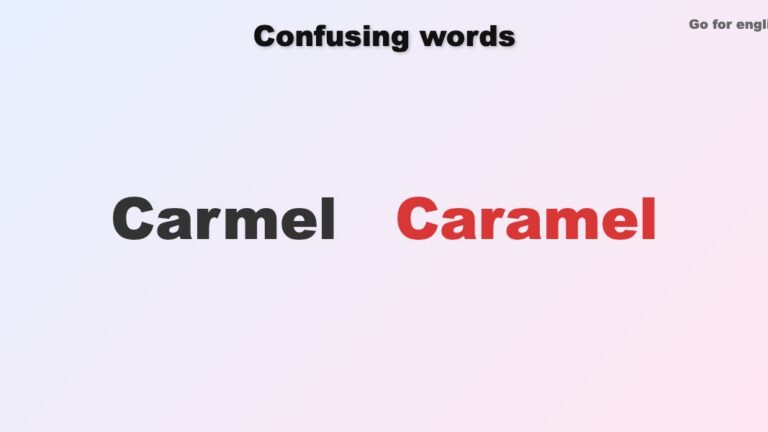
Many people find themselves puzzled when it comes to the terms “Carmel” and “Caramel,” often using them interchangeably without realizing their distinct meanings. For English learners, grasping the nuances between these two words is essential, as it not only enhances vocabulary but also improves clarity in communication. Understanding these differences can prevent mix-ups in everything from dessert orders to geographical discussions. In this article, we will delve into the definitions, usages, and contexts of both terms, helping you navigate this common confusion with ease.
Carmel vs. Caramel: A Quick Summary
The terms “Carmel” and “Caramel” both refer to sweet confections but have distinct meanings and uses. “Caramel” is the correct spelling for the rich, golden-brown candy made by heating sugar until it melts and turns liquid, often used in desserts and sauces. In contrast, “Carmel” is primarily a proper noun, referring to locations such as Carmel-by-the-Sea in California. While “caramel” is widely used in both American and British English, “Carmel” is less common and typically denotes geographical names rather than food. Understanding this distinction is essential for clear communication, especially in culinary contexts.
What Do ‘Carmel vs Caramel’ Mean?
Carmel and caramel may sound similar, but they refer to distinct concepts that can easily confuse English learners. “Caramel” is a noun that describes a sweet, chewy candy made from sugar, butter, and cream. It is often used as a flavor or topping in desserts, such as caramel sauce drizzled over ice cream. For example, “I topped my sundae with rich caramel.” On the other hand, “Carmel” typically refers to a proper noun, often used to denote a specific place, such as Carmel-by-the-Sea, a picturesque coastal town in California. In this context, it serves as a name rather than a common noun. For instance, “We spent our vacation in beautiful Carmel.” Understanding these definitions is crucial for clear communication.
‘Carmel vs Caramel’: The Differences
The differences between Carmel and caramel extend beyond their meanings. In American English, “caramel” is the standard spelling for the sweet treat, while “Carmel” is primarily recognized as a proper noun, particularly associated with geographic locations. However, regional preferences can lead to variations. For example, some people in the United States may pronounce “caramel” as “car-muhl,” while others say “care-a-mel,” showcasing a difference in pronunciation that may not affect spelling but can create confusion. In British English, “caramel” remains the preferred spelling for the candy, while “Carmel” still refers to places or names. This distinction is important for learners to grasp, ensuring they use each term correctly based on context. Understanding these nuances will enhance your English language skills and improve your communication when discussing these two terms.
Regional Preferences: Carmel vs Caramel
English is a diverse language that varies significantly across different regions, influencing vocabulary, pronunciation, and even spelling. One such example is the terms “Carmel” and “Caramel,” which may seem universally understood but have distinct regional preferences. Choosing the correct form often depends on the audience and context, making it essential to understand these differences as we delve into the usage of these terms.
American English
In the United States, the term commonly used is Carmel, particularly when referring to the coastal city in California. For instance, “I visited Carmel last summer and fell in love with its beautiful beaches.”
This usage is preferred in American English because it reflects the local name of the city, which is often pronounced without the second syllable, making it more relatable to American speakers.
British English
In British English, the term Caramel is primarily used when referring to the sweet, sticky confection made from sugar. For example, “I enjoy adding Caramel to my desserts for extra flavor.”
This form is preferred in British English as it aligns with the standard spelling and pronunciation of the confectionery item, adhering to conventional linguistic rules in the UK.
Examples in Context: Carmel vs Caramel
Understanding the correct usage of “Carmel” and “Caramel” is essential for effective communication. Real-life examples provide valuable insights into how each term is used in different contexts, helping learners distinguish between the two words confidently. The following examples will illustrate the proper usage of “Carmel” and “Caramel,” enhancing your writing and conversations.
Carmel
- After visiting the quaint town of Carmel, she decided to buy a vacation home there.
- The stunning views of the Pacific Ocean from Carmel Beach are breathtaking.
- Carmel Mission Basilica is a popular historical landmark in the area.
- Many artists are inspired by the natural beauty found in Carmel.
- He took a leisurely stroll along the charming streets of Carmel, admiring the unique architecture.
- Carmel is known for its art galleries and vibrant cultural scene.
- Every summer, tourists flock to Carmel to enjoy its beautiful coastline.
- She often mentions her favorite café in Carmel when reminiscing about her trip.
Caramel
- The dessert was topped with a rich layer of caramel that added sweetness to the dish.
- He drizzled warm caramel over the ice cream for extra flavor.
- Caramel can be made by heating sugar until it melts and turns golden brown.
- She loves the combination of chocolate and caramel in her candies.
- The recipe calls for a homemade caramel sauce that complements the cake perfectly.
- Caramel popcorn is a popular snack at fairs and carnivals.
- They enjoyed a delicious caramel latte at their favorite coffee shop.
- For a decadent treat, try adding caramel to your brownies.
Synonyms & Antonyms of Carmel vs Caramel
Learning synonyms and antonyms is essential for enhancing your vocabulary and communication skills. Synonyms allow for variety in both speech and writing, making your expression more engaging and colorful. Conversely, antonyms provide clarity by illustrating the exact meaning of a word through contrast. By mastering different word choices, learners can achieve a more fluent and natural command of the English language.
| Word | Synonyms | Antonyms |
|---|---|---|
| Carmel | None | None |
| Caramel | Syrup, Toffee, Brittle | None |
Common Mistakes and How to Avoid Them
Understanding the differences between “Carmel” and “Caramel” is essential for mastering English, as even advanced learners can sometimes confuse these terms. Correcting these mistakes not only enhances your fluency but also improves your overall accuracy in writing and speaking. Here are the most common errors and tips on how to avoid them.
- Using “Carmel” when referring to the sweet treat: The correct spelling for the confection made from sugar, butter, and cream is “Caramel.” Tip: Remember that “Caramel” has two “a’s,” which may help you associate it with its rich flavor.
- Confusing “Carmel” with geographical names: “Carmel” is often used as a proper noun, referring to places like Carmel-by-the-Sea in California. Tip: If you’re discussing a place, double-check the context to ensure you’re not mixing it up with the food item.
- Overusing “Caramel” in non-sweet contexts: Some learners mistakenly use “Caramel” to describe flavors or colors that aren’t sweet. Tip: Use “Caramel” specifically when referring to the candy or its flavor in desserts, and choose appropriate adjectives for other contexts.
- Regional variations in pronunciation: In some regions, “Caramel” is pronounced with two or three syllables. Tip: Familiarize yourself with the local pronunciation to avoid sounding out of place in conversation.
- Ignoring context in written communication: Misusing “Carmel” and “Caramel” can lead to misunderstandings in written texts. Tip: Always consider the context of your writing; if it’s about food, “Caramel” is likely the correct choice.
Tips for Correct Usage
Mastering the correct usage of “Carmel” vs “Caramel” is essential for clear and professional writing. Properly distinguishing between these terms not only enhances your grammatical accuracy but also boosts the overall quality of your content. Below are practical tips to help you use these terms correctly.
- Understand the Definitions: “Caramel” refers to the sweet, sticky substance made by cooking sugar, while “Carmel” is often used as a place name or a personal name.
- Context Matters: Always consider the context in which you are writing. Use “Caramel” when discussing food or dessert, and “Carmel” for locations or names.
- Check for Regional Usage: Be aware that “Carmel” may be used differently in various regions; for example, it can refer to specific places in California.
- Proofread Your Work: Always double-check your writing for the correct term, especially in dessert recipes or culinary discussions.
- Use Spell Check: Utilize spell-check tools to catch common errors, but remember that context is key, and automated tools may not always know the correct usage.
- Stay Updated: Language evolves, so stay informed about any changes or trends in usage regarding “Carmel” and “Caramel.”
- Consult Reliable Sources: When in doubt, refer to reputable dictionaries or style guides to clarify usage and spelling.
Frequently Asked Questions
1. What is the difference between Carmel and Caramel?
Carmel typically refers to a place or a name, while caramel is a sweet confection made by heating sugar until it melts and turns brown.
2. How do you pronounce Carmel?
Carmel is pronounced as ‘kar-mel’ in most contexts, especially when referring to the place, whereas ‘caramel’ can be pronounced as ‘kar-uh-mel’ or ‘care-a-mel’.
3. Is it correct to say Carmel sauce?
While some may refer to it as Carmel sauce, the correct term for the sweet sauce made from sugar is caramel sauce.
4. Can Carmel be used as a name?
Yes, Carmel can be used as a first name or surname and is often associated with locations, like Carmel-by-the-Sea in California.
5. What foods use caramel?
Caramel is commonly used in desserts such as candies, cakes, ice creams, and sauces to add sweetness and flavor.
6. Is there a difference in spelling between American and British English?
In American English, ‘caramel’ is the standard spelling, while ‘carmel’ is sometimes used as a regional variation, particularly in names.
7. Are there different types of caramel?
Yes, there are several types of caramel, including soft caramel, hard caramel, and caramel sauce, each with different textures and uses.
8. Why do people confuse Carmel and Caramel?
People often confuse Carmel and caramel due to their similar pronunciation and the fact that both words are commonly used in food contexts.